
Writing stories from your past means telling your version of events.
Two young girls are puzzled when Santa visits their home.

Can you have a cohort of two people? Merriam-Webster says, “Yes.” Joan—16 months my senior—and I were sisters and companions. As one of my other sisters said, Joan and Sharon were banded together as a unit. “Rarely did you speak of one without the other,” Shirley said. So close was our bond. Joan was my cohort, my teacher, my friend.
But two years ago, Joan—my much-loved sister, my forever mentor—passed away from the double ravages of Alzheimer’s disease and lung cancer. Joan was a person of strong faith, so we who love her are happy that she has gone to her eternal resting place. That doesn’t mean we don’t miss her a lot.
Most of my childhood memories include my sister, so it’s no surprise that I would have a Joan-and-Sharon Christmas story to share for Christmas with Hot Apple Cider. What I didn’t realize when I wrote the story is that we would be celebrating and promoting this book right around the anniversary of Joan’s passing on October 30, 2015.
One of my challenges of writing this memoir piece was telling the truth. I no longer had my trusty companion with me to discuss the happenings of that Christmas when Joan was seven years old and I had just turned five. I would have to do what Emily Dickinson advised: “Tell all the truth but tell it slant.” In other word, I would have to trust my own memory. Accepting that premise, I wrote more confidently.
I had worked on the story in a timely fashion and sent it off, but after it had been submitted, I had second thoughts. I wanted to begin the story with Santa jingling the sleigh bells at the kitchen door of our little house. This meant that what we discovered at the lake would be a backstory. I wasn’t sure how to handle this.
I discussed my concerns with my fellow Women Word Weaver in Barrhead, Alberta. They advised me that if I wasn’t satisfied with my story as I’d written it, I could withdraw it from consideration. Then I’d have the option of reworking it for another publication. I wrote a letter to N.J. Lindquist advising her of my decision.
N.J. replied that she liked my story and felt it had a place in the mix of stories she had chosen, and that she was willing to work editorially with me on the piece until we were both happy with it.
After several iterations by e-mail, and, thanks to N.J.’s help, I am proud of my story as it now stands. I also appreciate being part of this anthology, which I believe is a tremendous book of Christmas offerings.
One thing I’m reminded of as I write this post is that what a person remembers is that person’s truth. I simply let the story “unreel” in my mind like an old 35 mm home movie, without embellishments, and “Santa Visits Lakeview Farm” is what I got.
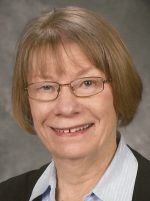 Sharon Espeseth says, “There is life after teaching!” While her days still seem full, they do include keeping in touch with loved ones. Although her husband, adult children, and grandchildren are super important to her, she is happy to squeeze writing and church music into the mix. Her published work includes nonfiction and poetry scattered about in periodicals and anthologies. You can find her monthly blogs posted on inscribewritersonline.blogspot.ca.
Santa Visits Lakeview Farm is a delightful story, all the more so because it is “true”. I liked reading in your blog how you felt the need to change things around in the way you presented it. The story works well at two different levels: that of the children and the wink-wink for the adults in the details provided. Starting with the bells was a great choice! Glad you and editor NJ worked it out for us to enjoy!